
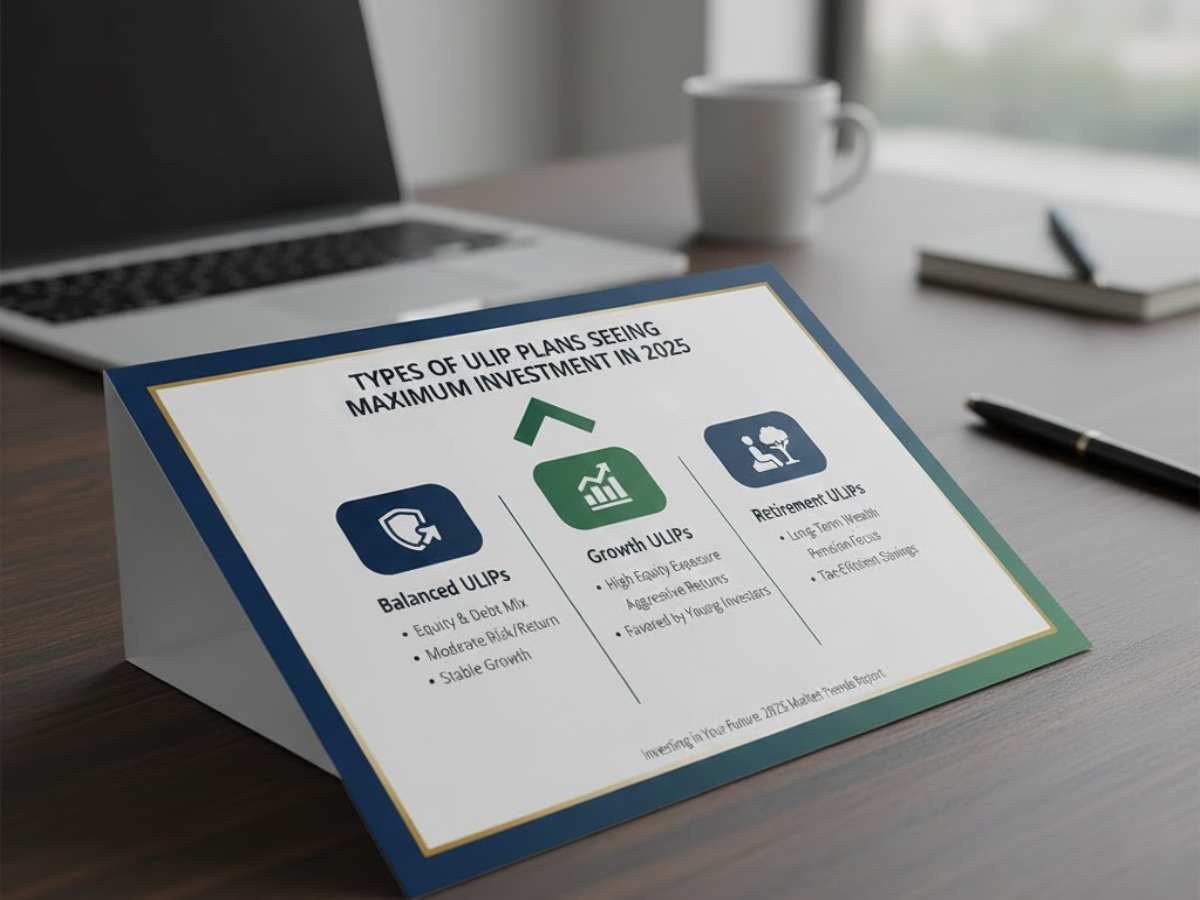
Types of ULIP Plans Seeing Maximum Investment in 2025
The way people look at long-term investing in India has been shifting quietly. Not because of any grand event, but because many families are realising their usual savings habits cannot keep pace with rising costs. Large goals—education, retirement, medical cushions—require more than scattered deposits and vague planning. This is how the unit linked insurance plan has come back into the picture for many investors in 2025.
It is not the product’s marketing that has changed the sentiment. It is the way households now think about discipline, flexibility, and the need for steady long-term contributions. Once people start comparing different options, certain types of ULIP plans begin standing out simply because they fit better with what most families are trying to achieve. There is no single favourite, but a few categories definitely see more movement than the rest.
Table of Contents
Equity ULIPs finding space among long-horizon savers
A noticeable number of long-term investors have been leaning toward equity-focused ULIPs. The reason is not complicated. People who can stay invested for many years prefer to let market growth work in their favour, and ULIPs allow that to happen without handling separate products for investment and insurance. The structure offers both—market exposure and protection—in one place.
Another factor is the ability to switch funds when needed. Even those who do not follow markets closely appreciate having the option. Moving from equity to something steadier when conditions feel uncertain, and returning later, gives a sense of control. And since these switches do not trigger tax events inside the ULIP, the process feels simpler than selling and reinvesting in separate instruments.
For anyone looking at a twenty-year horizon, an equity-tilted unit linked insurance plan feels aligned with how long-term wealth tends to grow.
Balanced ULIPs fitting the needs of middle-stage households
Not everyone is comfortable relying heavily on equity. Many families stand somewhere in the middle—wanting growth but not too much fluctuation. Balanced ULIPs, which mix equity with debt, have become a natural choice for this group.
These plans usually appeal to people who manage a long list of responsibilities at once. Education fees, home loans, medical needs, day-to-day bills—too much volatility can interfere with these commitments. A balanced ULIP softens those swings while still giving the portfolio room to grow.
This middle ground is why these plans continue to receive steady attention. Among the many types of ULIP plans, this one is seen as the practical option for households that need a predictable investment but cannot afford to fall behind inflation either.
Debt ULIPs quietly attracting steady inflows
Debt-oriented ULIPs do not get the same visibility as equity-heavy or balanced ones, but they are steadily picking up investors who want calmer movement in their long-term money. Some people simply prefer less fluctuation, especially when saving for a specific event like higher education or early retirement.
Debt ULIPs behave somewhat like long-duration bond strategies with the added advantage of insurance. People who want steady accumulation without having to check the markets often find this category suitable. Another quiet trend here is tactical shifting—keeping money in debt funds during turbulent conditions and returning to equity options inside the same ULIP once things settle.
A debt-focused unit linked insurance plan works for those who value predictability over aggressive growth.
Goal-based ULIPs growing because they remove decision fatigue
One group of ULIPs gaining more interest is the category built around specific financial goals. Plans meant for retirement, education, or other defined milestones simplify the process. Investors do not have to think too much about asset allocation because the structure of the ULIP adjusts itself gradually as the target year approaches.
This feature appeals to people who prefer a “guided” approach. The plan increases or reduces equity exposure automatically as time passes, reducing the chance of last-minute volatility. For anyone who tends to overthink investments or does not enjoy monitoring markets, this format feels reassuring.
Among the types of ULIP plans, goal-oriented versions offer a noticeable advantage: they stay aligned with the timeline instead of asking the investor to constantly recalibrate.
Lifecycle ULIPs gaining traction as work patterns change
Another pattern visible this year is the growing interest in lifecycle ULIPs. These plans shift risk automatically based on age. Younger policyholders begin with more equity, and the plan gradually tilts toward debt as the person moves closer to retirement or major responsibilities.
This suits those with irregular career paths. Many people switch jobs often, move between cities, or work in industries where earnings fluctuate. A lifecycle structure reduces the need to make investment decisions at every stage. The plan adjusts without requiring the policyholder to time the markets or rethink risk repeatedly.
ULIPs with broad fund-switch freedom appealing to practical investors
Flexibility is becoming one of the strongest expectations in financial products. ULIPs that allow multiple or even unlimited fund switches tend to attract those who want to adjust their strategies without dismantling the entire plan. Some use this feature occasionally; others use it more actively.
This flexibility is useful when personal circumstances change—new responsibilities, altered budgets, or shifting financial priorities. It also helps during unpredictable economic phases. People like knowing they can move their money to a safer fund without penalty, and move it back when things stabilise.
This is one of the practical features of ULIP plans that sets them apart from many traditional long-term products.
Why ULIPs feel more acceptable now than a decade ago
Years ago, ULIPs had a reputation for being complicated and expensive. Fees were higher, and communication was often unclear. Many investors felt uncertain about what they were signing up for. Over time, clearer product structures and tighter regulation have helped rebuild confidence.
A few things have changed noticeably:
- Charges are simpler to understand
- Online dashboards show fund values easily
- Documentation has become clearer
- Fund choices are broader
- Switching rules are straightforward
With information becoming easier to access, investors feel more in control of their decisions.
The financial environment shaping ULIP preferences
Savings behaviour in India has been evolving gradually. Rising education fees, longer retirements, and unpredictable medical costs have forced families to think deeper about long-term planning. A large number of households now want products that combine structure with growth potential. They also want to avoid spreading money across too many unrelated instruments.
This is how the unit linked insurance plan has slipped back into relevance. It sits in the middle—not entirely conservative, not purely market-driven. The blend feels suitable for households that want a disciplined approach without giving up flexibility.
Which ULIP categories appear strong for the coming years
Based on visible patterns—product design changes, digital behaviour, and recurring investor preferences—certain categories seem positioned to continue receiving attention:
- Equity-based ULIPs for very long-term growth
- Balanced ULIPs for families managing mixed responsibilities
- Goal-based ULIPs for predictable planning
- Lifecycle ULIPs for low-maintenance asset shifts
- Debt ULIPs for steady accumulation
Each category solves a different type of problem, and that variety itself is contributing to ULIPs becoming more relevant in 2025.
Bringing the ideas together
The ULIPs gaining momentum in 2025 reflect how households think about future security. People want investments that can adapt without being rebuilt from scratch. They want long-term exposure to growth but without abandoning protection. The types of ULIP plans seeing more investment now match these expectations—equity where ambition is high, balanced options where stability matters, debt plans for caution, and lifecycle or goal-based versions where guidance is preferred.
A unit linked insurance plan today is not seen as a complex hybrid anymore. It has become a tool for steady long-term planning, shaped by rising costs, shifting careers, and practical household needs. And that is what makes certain ULIP categories stand out in 2025.